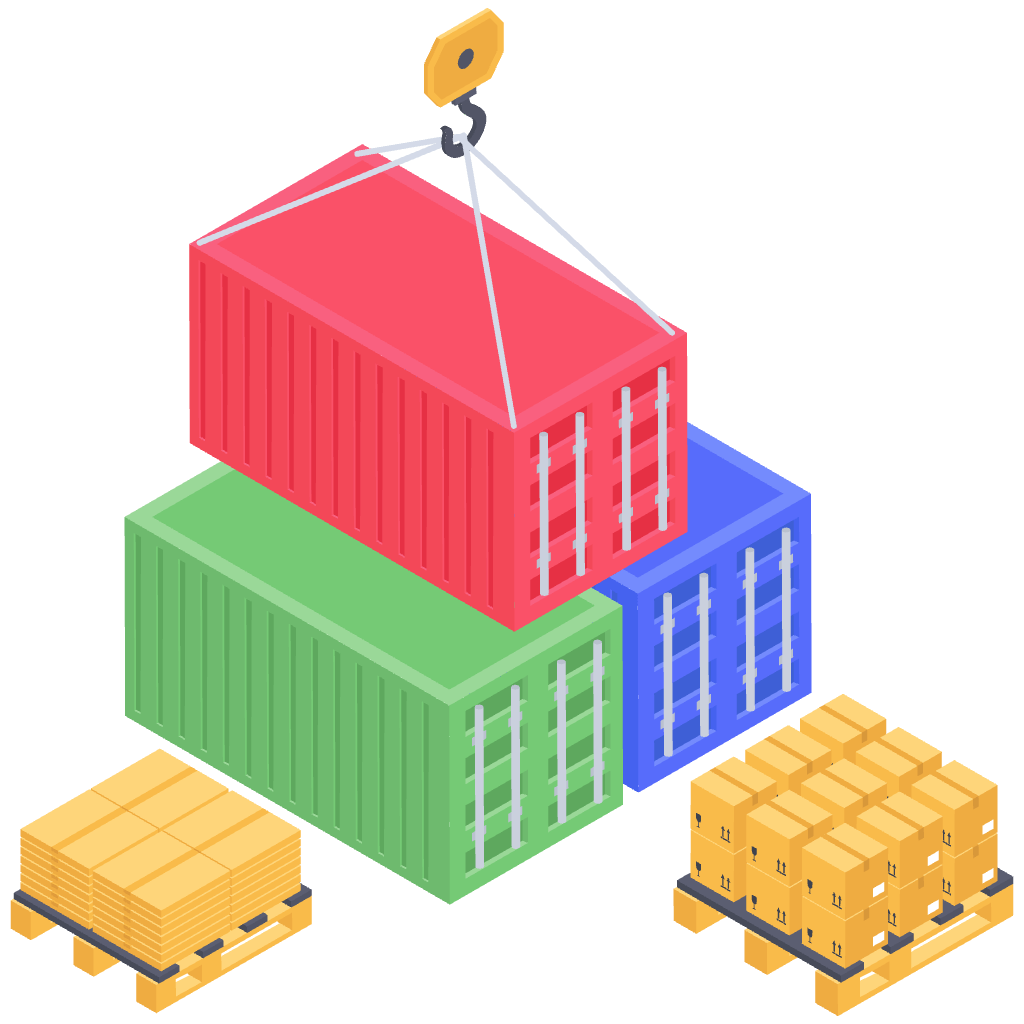
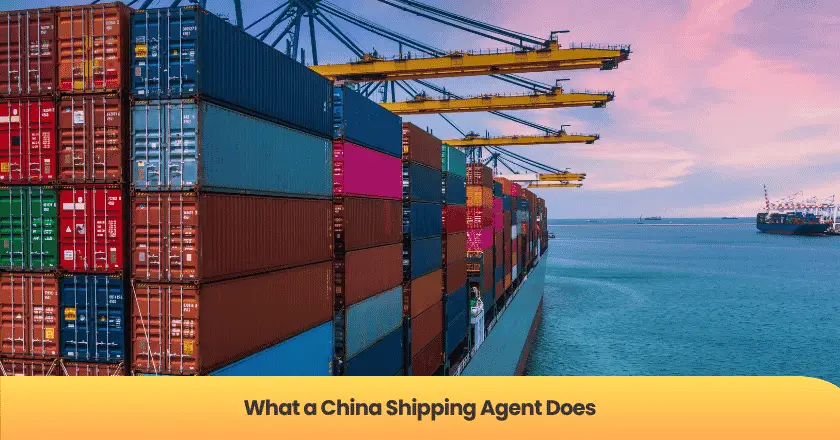
A buyer asks a contact in Ningbo to recommend a shipping agent and receives two introductions. One company talks about berthing windows, pilotage and port formalities. The other talks about booking space, consolidating cartons and preparing export documents. Both call themselves shipping agents in English. Under Chinese rules they are different categories of business, they answer to different customers, and only one of them is working for anybody with cargo.
The label covers two roles that sit on opposite sides of a shipment. Knowing which one you are talking to saves a fortnight of misdirected conversation, and it explains why some enquiries get answers that seem to be about somebody else's problem entirely.
Key Takeaways
• In the legal sense, an international ship agent in China acts on the commission of the shipowner, charterer or operator.
• Its scope includes port entry and exit formalities, pilotage and berthing, signing bills of lading on the carrier's behalf and handling customs formalities for the vessel.
• What most importers actually want is a freight forwarder or NVOCC, which acts for cargo rather than for a vessel.
• NVOCC operators in China work under a filing regime with the transport authority rather than a licence.
• Ask who commissions the company and who pays it, because that single answer identifies the role.
Two Roles Behind One English Phrase
The confusion is linguistic rather than deceptive. Chinese trade practice distinguishes the two clearly, and the English word shipping blurs them.
The Ship Agent Works for the Vessel
China's Regulations on International Maritime Transportation set out what an international ship agency operator may do on the commission of a shipowner, charterer or ship operator. The listed scope covers arranging port entry and departure formalities, arranging pilotage, berthing and loading and discharge; signing bills of lading and transport contracts on behalf of the principal and accepting bookings; handling customs formalities for the vessel, containers and cargo; and canvassing cargo and arranging shipment and transshipment.
Read the opening words of that scope rather than the list. The agency acts for the vessel side, which means its client is the carrier. Where its interests and a cargo owner's diverge, it is not the cargo owner it answers to.
The Cargo Side Works for You
What most importers need is a freight forwarder, and often an NVOCC (non-vessel operating common carrier, a company that issues its own bills of lading without owning ships). Under the same regulatory framework, NVOCC operators file with the provincial transport authority, and the rules were amended so that operating an NVOCC business requires filing complete and accurate information within fifteen days of commencing business rather than obtaining a prior qualification certificate.
That distinction matters when checking a company. Asking whether it holds an NVOCC filing and whether its bill of lading form is registered tells you something concrete, whereas asking whether it is a licensed shipping agent invites an answer about a different category of business.
A third label circulates alongside these two and adds to the confusion. Booking agent usually describes a company that secures space with carriers and passes it on, which is a function within forwarding rather than a separate category. Customs broker is different again and is licensed in the destination country. None of the three is interchangeable, and companies use all of them loosely in English marketing.
Expert Tip: Ask one question in your first message: whose instructions do you act on, the shipowner's or mine? It sounds blunt written down and it is entirely ordinary in this industry, where the distinction is basic rather than sensitive. Companies answer it in a sentence. I have watched buyers spend three exchanges describing cargo requirements to a firm whose business is berthing windows, and the whole misunderstanding costs one line to prevent.
What Each One Actually Handles
Once the roles are separated, the practical division of work is straightforward.
Vessel-Side Work
A ship agent manages the vessel's business in port: clearance in and out, pilots, tugs, berth allocation, stevedore coordination, crew matters and supplies, and the disbursement account that settles all of it with the owner. Where it signs bills of lading, it does so on the carrier's authority.
None of this touches your commercial position. The agent is not choosing your routing, negotiating your rate, or watching your goods. It is making sure a ship arrives, works cargo and leaves without administrative obstruction.
Cargo-Side Work
A forwarder or NVOCC books space for your consignment, chooses routing, consolidates less than container load cargo, prepares or coordinates export documentation and manages the handover at destination. Where it acts as NVOCC it issues its own bill of lading to you and takes carrier-like responsibility for the leg it sells.
In the United States, both of these cargo-side roles are regulated together as ocean transportation intermediaries by the Federal Maritime Commission, with domestic firms licensed and overseas NVOCCs required to register and post a bond. Comparable regimes exist in most major markets.
One overlap is worth knowing about. A single group can hold both kinds of business through separate entities, running ship agency for carriers and forwarding for cargo owners under related names. That is entirely legitimate and it means the group-level description tells you nothing. Confirm which registered entity is contracting with you, since that is the party whose obligations you can rely on.
Common Mistake to Avoid: Engaging a company because it described itself as a shipping agent, without establishing whose instructions it acts on, is how buyers end up with a provider whose obligations run in the wrong direction. The risk is not incompetence. It is that a firm acting for the carrier or for your supplier will make reasonable decisions from a position that is not yours, particularly around document release and scheduling. Establish the commissioning party before discussing anything else, and where the answer is your supplier, appoint your own provider for anything beyond a first trial order.
Reading What Is Actually Being Offered
Plenty of Chinese companies offer cargo-side services and describe themselves loosely in English. The words matter less than what sits behind them.
Signals in the Offer Itself
A cargo-side provider quotes rates per container or per cubic metre, discusses routing and transit times, asks about your cargo ready date and offers to handle export documents. A vessel-side agency talks about port calls, berth availability and disbursements. If a quotation arrives priced for your goods, you are dealing with the cargo side whatever the letterhead says.
Ask for the registered Chinese company name and check the business scope, since ship agency, freight forwarding and NVOCC operation appear differently in registration records. A company registered around freight forwarding and describing itself as a ship agent in English is simply using a loose translation.
Watch how a company handles your first technical question as well. A cargo-side provider asked about carton dimensions and units per container answers with volume arithmetic, because that is its daily work. A vessel-side agency treats the same question as somebody else's business, which is a fair reaction rather than poor service.
Documents Tell You the Role
Ask whose bill of lading you will receive. A carrier's master bill signed by an agent on the carrier's behalf is a different instrument from a house bill issued by an NVOCC in its own name, and the difference determines against whom your claim runs if cargo is lost or damaged.
Ask also whether the company holds an NVOCC filing where it proposes to issue its own bill. This is a verifiable question with a verifiable answer, and it is more informative than any description of capability.
Expert Tip: Request the bill of lading form before you book, not after the vessel sails. The document tells you the issuer, the terms and the liability position, and reviewing it takes ten minutes while there is still time to choose differently. Buyers routinely see their first bill of lading days before arrival, at which point the terms are already settled. I have changed provider twice on the basis of what the form said, both times before any cargo moved.
Working With the Right Provider
Once you know which side you are engaging, the management questions become the ordinary ones.
Questions Worth Asking Cargo-Side Providers
Ask for routing and port pairs in writing, whether the service is direct or transshipped, how many days of free time you have at destination, who files your import entry and whether that fee is included, and for a full list of expected destination charges with amounts rather than a note saying local charges apply.
Ask for the name of the destination agent before booking rather than after. A provider with a weak partner at the far end produces excellent origin service and then goes quiet exactly when the container lands and charges begin to accrue.
Where the Provider Sits Among Your Others
A cargo-side provider handles movement and documents. It does not check what is inside sealed cartons, does not file your import entry unless it also holds customs brokerage capability in your country, and does not insure your goods by default.
Name a party against each function before your first shipment: supplier for production and packing, inspection provider for the goods, forwarder from collection to delivery, customs broker for the entry, insurer for transit risk. Where one company covers several, confirm it in writing rather than assuming, because bundled service descriptions frequently cover less than they appear to.
Expert Tip: Keep the registered Chinese name, the business scope and the filing details of every logistics provider you use in one short record, updated annually. Companies change names, merge and occasionally lapse, and English trading names carry no legal weight. The record takes minutes to build during onboarding and is the difference between a quick verification and an afternoon of searching when a problem arrives and you need to know exactly who you contracted with.
Where NewBuyingAgent Sits Relative to the Shipping Chain
Everything above concerns moving goods that already exist and already match what was ordered, which is a separate problem from getting them made correctly in the first place.
Only less than 5% of China's factories are within your reach. NewBuyingAgent gives you 100% Access to China's Factories through its 50,000+ cooperated partner factories—no language/region/time zone barriers. Its local reputation gets you full factory cooperation.
NewBuyingAgent is your perfect partner for global sourcing from China, backed by 30 years of expertise in trade, manufacturing and quality control. Its mission is to make China sourcing effortless and profitable for global buyers.
Coordinating factories, inspectors and logistics providers toward one loading date is the work that quietly fills a buyer's week.
NewBuyingAgent handles all factory communication—perfect for multi-category buyers. Free up your time to focus on expanding your local market sales.
Frequently Asked Questions
Is a shipping agent the same as a freight forwarder?
Not in the strict sense. Under Chinese rules an international ship agency acts on the commission of the shipowner, charterer or ship operator, handling port formalities, pilotage and berthing and signing bills of lading on the carrier's behalf. A freight forwarder acts for cargo owners. The English term is used loosely for both, so ask whose instructions the company acts on.
Do I need a shipping agent to export from China?
As a cargo owner, what you need is a freight forwarder or an NVOCC. Ship agency services are engaged by carriers rather than by importers. Where a supplier or forwarder mentions arranging a shipping agent, they are usually describing routine vessel-side arrangements that do not involve you.
How do I check a Chinese logistics company is legitimate?
Ask for the registered Chinese company name and unified social credit code, then check the registered business scope, since ship agency, freight forwarding and NVOCC operation are recorded differently. Where the company will issue its own bill of lading, ask whether it holds an NVOCC filing with the transport authority.
Whose bill of lading should I receive?
Either a carrier's master bill or a house bill issued by an NVOCC in its own name, and you should know which before booking. The answer determines against whom a cargo claim runs. Ask to see the form in advance rather than receiving it days before arrival, when the terms are already fixed.
Can one company handle both the vessel side and my cargo?
A group may hold both businesses through separate entities, and the entity contracting with you determines whose interests it serves in that transaction. Ask which registered company appears on your contract and on your bill of lading. Group-level descriptions are marketing, while the contracting entity is the party you can actually hold to anything.
Conclusion
Two businesses share an English label, and one of them works for the ship. Ask whose instructions a company acts on, check the registered scope rather than the translation, establish whose bill of lading you will hold, and name a party against each function in your chain. The distinction takes one question to settle and prevents a category of confusion that otherwise surfaces at the worst moment.For the part of the chain that happens before cargo reaches a port, NewBuyingAgent handles factory selection, quality control and delivery from China.
Sources
1. State Council of the People's Republic of China — Regulations of the PRC on International Maritime Transportation, as amended by State Council Order No. 817, Article 20 on the scope of international ship agency business —https://www.mee.gov.cn/zcwj/gwywj/202510/t20251011_1129175.shtml— accessed 28 August 2026
2. Ministry of Transport of the People's Republic of China, via the State Council — Decision on amending the Implementing Rules of the Regulations on International Maritime Transportation, covering NVOCC filing requirements —https://www.gov.cn/zhengce/zhengceku/2019-07/08/content_5455517.htm— accessed 28 August 2026
3. United States Federal Maritime Commission — Ocean Transportation Intermediaries: licensing and registration of ocean freight forwarders and NVOCCs —https://www.fmc.gov/about/bureaus-offices/bureau-of-enforcement-investigations-and-compliance-beic/office-of-compliance/ocean-transportation-intermediaries/— accessed 28 August 2026
NewBuyingAgent
Related Resources

Get Started Today
Let's Turn Your Sourcing Goals into RealityWeChat:+86 15157124615
WhatsApp:+86 15157124615
Address:Building 10 #39 Xiangyuan Road, Hangzhou, China