A buyer approves a sample in size 42, orders a full size run, and receives shoes that fit correctly at 41 and 42 and badly at both ends of the range. Nothing was substituted and nobody cut corners. The sample was built on one last, the production run used a graded set derived from it, and the grading was never reviewed because the buyer did not know it was a separate step requiring a separate approval.
Footwear is assembled from components made by different specialists using tooling that multiplies with every size. Understanding how the work divides explains most of what buyers find surprising about minimums, lead times and where quality problems originate.
Key Takeaways
• Construction method determines which factories can build your shoe, since the machinery differs fundamentally.
• The last is the foundation of fit and it is tooling, with the same ownership questions as any mould.
• Outsole moulds are needed per size, so tooling cost scales with the size range rather than with the design.
• Upper stitching is frequently done in separate workshops, which affects lead time and where defects arise.
• Leather carries specific chemical and origin obligations that apply to the importer rather than the factory.
Construction Decides the Factory
Shoes are attached to their soles in several fundamentally different ways, and each requires its own equipment and skills.
The Main Methods
Cemented construction bonds the upper to a finished outsole with adhesive, which suits most casual and dress footwear and requires lasting machines and bonding lines. Vulcanised construction cures rubber to the upper under heat, giving the classic canvas trainer its foxing tape, and requires vulcanising ovens.
Injection and direct-injection methods form the sole onto the upper in a mould, which needs injection equipment and a mould set for every size. Welted construction stitches the upper, insole and outsole together through a rib and is the most labour-intensive and durable of the common methods.
Why One Factory Rarely Does All of Them
The equipment does not overlap. A vulcanising plant cannot run direct injection, and a cemented line cannot produce a welted shoe without a different skill base entirely. Factories therefore specialise, and a supplier claiming full capability across all constructions is usually describing subcontracting.
Decide the construction before shortlisting suppliers. It narrows the search immediately and prevents the common pattern of quoting a design to factories that would have to buy equipment or send the work elsewhere to build it.
Category specialisation runs deeper than construction alone. Factories tend to concentrate on a segment as well as a method, so a plant geared to bulk casual footwear and one building small runs of technical outdoor product may share a construction and very little else. Ask what the factory builds most of, since the answer predicts both what it does well and what it treats as an inconvenience.
Expert Tip: Ask which construction a factory runs as its main business rather than which ones it can do. Every shoe factory will say yes to most requests, and the honest answer sits in what the line is set up for. I ask what proportion of last year's output used the construction I need, and the number is either reassuring or the end of the conversation. Buyers who skip this end up as the smallest and least familiar order on somebody's least practised line.
The Last and the Tooling Stack
Footwear carries more tooling than buyers expect, and most of it multiplies across the size range.
The Last Is the Foundation
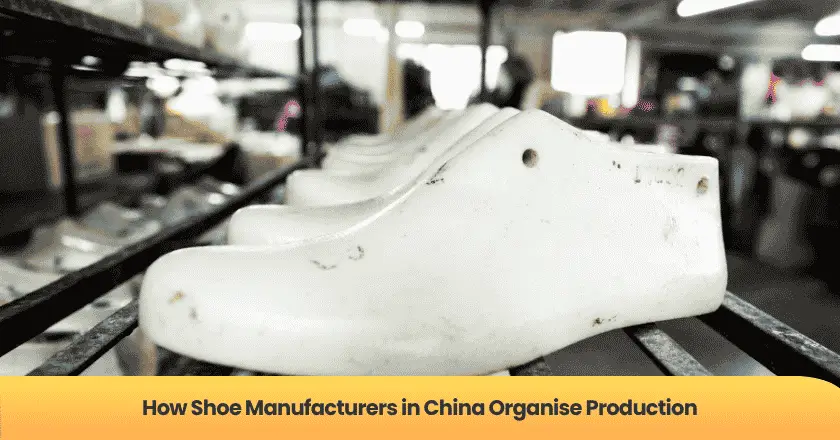
The last is the form the shoe is built around, and it determines fit, volume and shape more than any other component. A design approved on one last will feel different on another even at identical measurements, which is why a change of factory rarely reproduces a fit exactly.
Lasts are tooling and carry the same ownership questions as any mould. Ask who owns the last, where it is stored, how long it is kept and whether it can be transferred. Buyers who move production and expect the fit to follow are usually surprised, and the surprise traces back to a last left behind.
Development on the last has become faster in recent years. Digital last design and printed trial lasts let a fit be reviewed in days rather than waiting for a machined form, which shortens the earliest and most iterative stage of a shoe programme. The production last still has to be made, and the decision arrives with better information than it used to.
Grading and Moulds Per Size
A last is developed in a base size and graded across the range, and grading is a technical step in its own right. Approve a fitting sample in the base size and at least one size at each end of the run, since grading errors show at the extremes rather than in the middle.
Outsole moulds are needed for each size, which is why tooling cost in footwear scales with the size range. A design offered across ten sizes carries ten mould sets, and reducing the range is one of the few reliable ways to cut development cost. Barcoding follows the same logic, since GS1 requires a distinct Global Trade Item Number for each product variation including size and colour.
Common Mistake to Avoid: Approving a single sample and assuming the size run follows is the most expensive error in footwear development. Fit is created by the last and reproduced through grading, and neither is verified by a sample in one size. Order fitting samples at the base size and at both extremes of the range, put them on real feet, and record the approval per size rather than per style. The cost is three or four extra samples against a production run where a third of the sizes may be unsellable.
How the Work Divides
A finished shoe passes through several businesses, only some of which are inside the factory you visited.
Uppers, Bottoms and Assembly
Uppers are cut and stitched, often in workshops separate from the main plant, since stitching is labour-intensive and suits smaller units. Bottoms, meaning outsoles and midsoles, usually come from specialist sole makers with their own moulding equipment. Assembly, lasting and finishing happen at the factory you contract with.
This division is normal and it means your lead time is set by the slowest component rather than by assembly capacity. Ask which components are made in-house and which are bought, and ask for the lead time of each rather than a single figure for the order.
Packing and cartoning deserve their own instruction in footwear, since shoes ship in pairs boxed individually and then cased, and how sizes are assorted within a case affects your warehouse as much as your freight. Specify the size assortment per carton rather than leaving it to the factory, because a case of mixed sizes and a case of one size create very different receiving work.
What This Means for Minimums
Minimums stack rather than combining. A material batch for the upper, a mould set for the outsole, a colour run for the dyeing and a print setup for the packaging each carry their own threshold, and the binding one is whichever sits highest.
Colourways multiply the total in the same way they do in apparel, since materials are dyed in lots. A 600-pair minimum across three colours is an 1,800-pair commitment, and buyers frequently plan ranges before discovering this.
Expert Tip: Ask where the uppers are stitched and whether the same workshop is used every season. Upper stitching is where most visible quality variation originates, and a factory that rotates between workshops will produce batches that differ in ways nobody intended. Where the answer is a consistent partner, ask whether your inspection can cover that site as well as the assembly plant. The request is ordinary and it puts checking where the variation actually happens.
Samples and Compliance
Footwear development runs through a defined sample sequence, and materials carry obligations that fall on the importer.
The Sample Sequence
Development normally moves from a prototype confirming appearance, to a fitting sample confirming last and grading, to a confirmation sample built with production materials and tooling, and finally to shipment samples drawn from the run itself. Each answers a different question and skipping one moves its risk into production.
Approve against production materials rather than substitutes. A confirmation sample made with a different leather batch or a hand-finished sole tells you about the design and not about what the line will produce, and the gap between the two is where first orders disappoint.
Materials, Chemicals and Origin
Leather carries specific obligations. Chromium VI is restricted under REACH, and leather articles coming into contact with the skin may not be placed on the EU market where they contain it at 3 mg/kg or more of the total dry weight, with the same limit applying to leather parts within an article.
Origin obligations are arriving alongside. Cattle products including leather fall within the EU Deforestation Regulation, and after two postponements the Council confirmed a revision moving application to 30 December 2026 for all operators, with an extra six months for micro and small operators. The due diligence obligation sits with the operator placing goods on the market, which for most footwear importers means you.
Expert Tip: Put material compliance into the specification rather than handling it separately, and name the test standard alongside the material. A factory told to use full-grain leather will source what is available. A factory told to use full-grain leather meeting a stated chromium VI limit, with a test report per batch, sources differently and prices accordingly. The second version costs more and is the one that survives a market surveillance check.
Matching Construction to Capability
Every decision above rests on finding a factory whose line genuinely runs the construction your product needs, which is a narrower search than it first appears.
20,000+ product development & QC experts ensure your products match market needs and stay high-quality.
Narrow searches only work where the pool being searched is wide enough to contain the right specialist.
Only less than 5% of China's factories are within your reach. NewBuyingAgent gives you 100% Access to China's Factories through its 50,000+ cooperated partner factories—no language/region/time zone barriers. Its local reputation gets you full factory cooperation.
NewBuyingAgent is your perfect partner for global sourcing from China, backed by 30 years of expertise in trade, manufacturing and quality control. Its mission is to make China sourcing effortless and profitable for global buyers.
Frequently Asked Questions
Why is tooling so expensive for footwear?
Because it multiplies across the size range. Outsole moulds are needed per size, and lasts are developed in a base size then graded across the run. A design offered in ten sizes carries ten mould sets, which is why reducing the size range is one of the most effective ways to cut development cost on a first order.
Can one Chinese factory make every type of shoe?
Very few can, since cemented, vulcanised, injected and welted construction need fundamentally different equipment. Factories specialise, and a supplier claiming all constructions is usually subcontracting. Decide your construction first, then shortlist factories that run it as their main business rather than as an occasional capability.
How many samples should I expect before production?
Commonly four stages: a prototype for appearance, a fitting sample confirming the last and grading, a confirmation sample using production materials and tooling, and shipment samples from the run. Order fitting samples at the base size and at both extremes, since grading problems appear at the ends of the range rather than in the middle.
What compliance applies to leather footwear?
Chromium VI in leather that contacts skin is restricted under REACH at 3 mg/kg of total dry weight. Cattle products including leather also fall within the EU Deforestation Regulation, which applies from 30 December 2026 for all operators. Both obligations sit with the importer, so specify the requirements and collect the documentation from suppliers ahead of time.
How long does a first footwear order usually take?
Longer than most categories, because development runs through several sample stages and tooling has to be made before production can begin. Last development, grading, mould production and confirmation samples each add time ahead of the run itself. Repeat orders are considerably shorter, since the tooling exists and only materials and quantities change.
Conclusion
Pick the construction before the factory, treat the last as tooling with an owner, approve fit across the size range rather than in one size, ask where uppers are stitched, and write material compliance into the specification. Footwear rewards preparation more than most categories, because so much of what determines the finished shoe is decided before anything is cut. For buyers matching a design to the right kind of factory, NewBuyingAgent handles factory selection, quality control and delivery from China.
Partial Sources
1. European Chemicals Agency — chromium VI compounds among substances restricted under REACH Annex XVII, including the 3 mg/kg limit for leather in skin contact —https://echa.europa.eu/substances-restricted-under-reach/-/dislist/details/0b0236e1807e2bc1— Accessed 1 September 2026
2. Council of the European Union — Deforestation: Council signs off targeted revision to simplify and postpone the regulation, 18 December 2025 —https://www.consilium.europa.eu/en/press/press-releases/2025/12/18/deforestation-council-signs-off-targeted-revision-to-simplify-and-postpone-the-regulation/— Accessed 1 September 2026
3. GS1 — Global Trade Item Numbers and barcodes, requiring a distinct number for each product variation including size and colour —https://www.gs1.org/standards/get-barcodes— accessed 6 August 2026
NewBuyingAgent
Related Resources
Get Started Today
Let's Turn Your Sourcing Goals into RealityWeChat:+86 15157124615
WhatsApp:+86 15157124615
Address:Building 10 #39 Xiangyuan Road, Hangzhou, China