
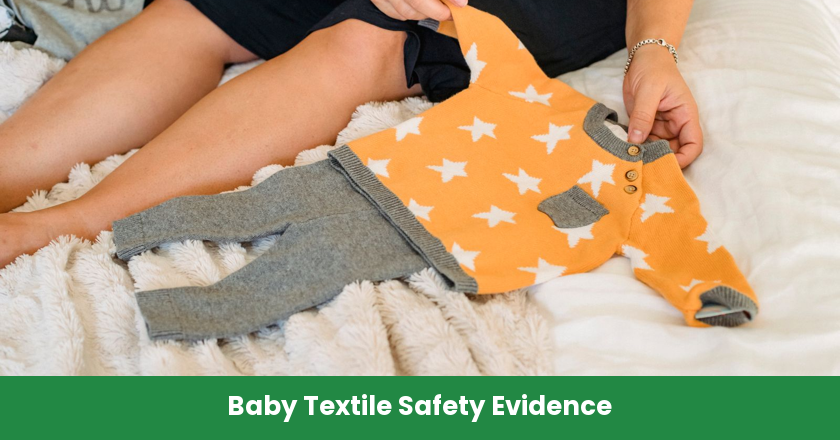
Before ordering baby textiles, record what the finished product is, how it will be marketed, and where it will be sold. Then match each flammability, trim and chemical approval to the actual product and the relevant components. A fabric report can support a fabric decision while leaving the finished garment, an attached snap, a print or a coated bib layer unresolved. Start with the U.S. examples below and assign a reviewer for each destination.
What to Approve for a Baby Textile Order
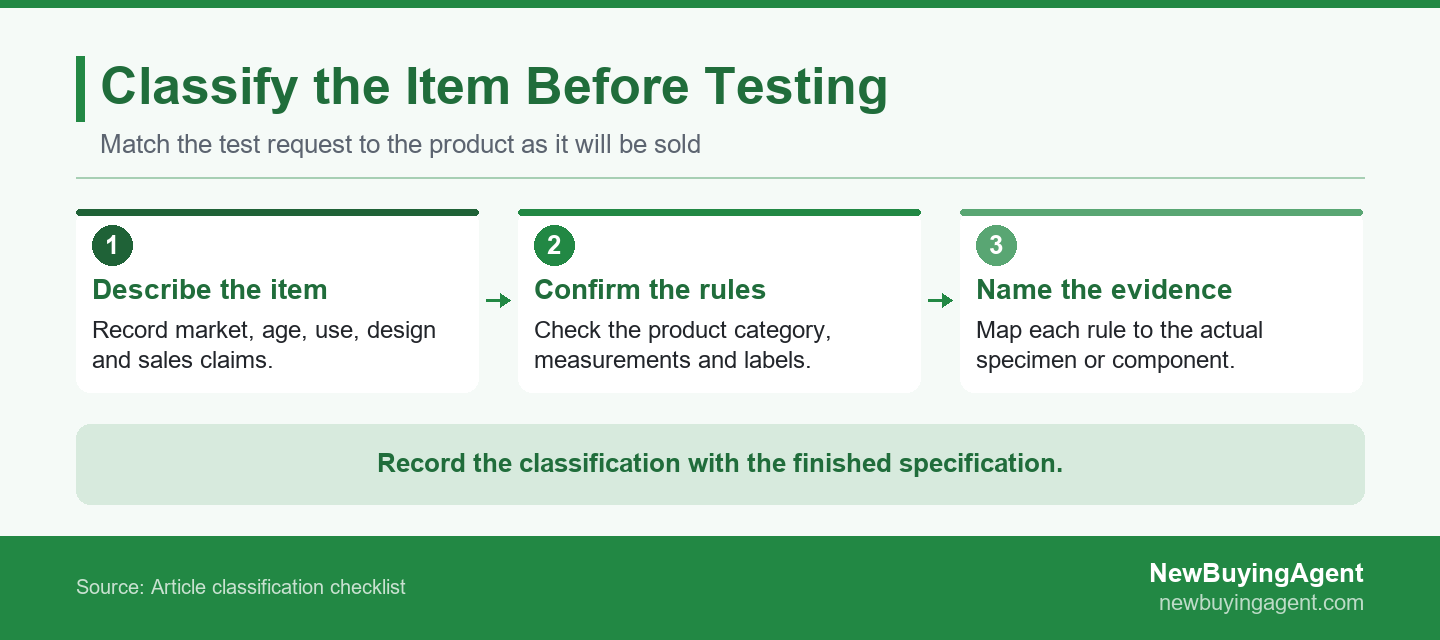
Classify the finished item by age, destination, intended use and the claims on its packaging and listing. Confirm the applicable flammability route, check trim retention on the assembled product, and obtain chemical evidence for the components and finishes that need it. Record the approved build and the evidence that covers it before authorizing a production lot.
- How it works: Give the reviewer the product sketch, sales description and component list before the lab receives specimens.
- Risk: A new snap, print or coating can affect an approval while the underlying fabric stays the same.
- Decision: Hold affected goods until the responsible party has checked the changed part and approved its evidence.
Keep this evidence by SKU and revision. A daytime bodysuit, a garment sold for sleep and a feeding bib may use similar textiles while following different rules. Review non-wearable textiles and products promoted for infant sleep under their own product categories. The purchase record should describe the finished article, and the compliance reviewer should confirm the rules for the actual market and use.
Confirm the Product and Flammability Route
Choose the flammability route after reviewing the finished item's use, age range, design and labeling. For a U.S. apparel order, determine whether the item is general wearing apparel or whether it falls under a children's sleepwear category or a qualifying exception. Give the lab the actual construction and size range as well as the photos and wording used to sell it.
The CPSC clothing guidance explains that general wearing apparel and qualifying infant or tight-fitting sleepwear garments follow applicable clothing flammability requirements. Children's sleepwear outside those definitions follows the applicable sleepwear standard. Ask the reviewer to distinguish the general clothing textile standard in 16 CFR part 1610, any applicable vinyl plastic film requirements in part 1611, and the sleepwear standards in parts 1615 and 1616.
The CPSC infant and tight-fitting garment guidance explains that an infant garment must be sized nine months or smaller, meet garment length limits, comply with the applicable clothing textile and vinyl plastic film flammability requirements, and carry size labeling in months. A tight-fitting sleepwear route has its own dimensional, trim and labeling conditions. Ask the lab and compliance reviewer to verify the finished measurements and the proposed tags, labels and package presentation.
| Product to classify | Details to provide | Decision to record |
|---|---|---|
| General wearing apparel | Intended daytime use, garment construction, exposed fabric and any film. | Applicable clothing flammability rule and evidence or testing rationale. |
| Garment marketed for sleep | Age and size range, permitted dimensions, trims, tags and sales copy. | Applicable sleepwear route or documented basis for a qualifying category. |
| Bib, loose blanket or other textile item | Use, age, wearability, construction, claims and accessible components. | Product-specific classification and applicable rules. |
Give the lab the fabric identity, surface finish, weight, exposed faces, coatings and changes such as brushing or printing. Ask it to identify any applicable testing exemption and the evidence needed to support it. Record the basis separately from the underlying rule. If a garment uses different exposed fabrics on the front, back or lining, ask which specimens represent each relevant construction.
Freeze the classification with the approved specification. If the sales team changes the product description, or a size, fit or trim changes, send the actual revision and marketing together for review before production release.
Use the intended use and finished design to decide what evidence to request
Check Installed Trims and Their Attachments
Check snaps, buttons, zipper pulls and decorative trim on the assembled item. Make each attachment traceable to the fabric, reinforcement and production method used in the submitted sample. Agree with the lab or quality team on the relevant mandatory rules and on additional retention checks for the intended use, including how to handle any detached or damaged piece.
The CPSC small parts guidance lists children's clothing and accessories such as buttons among the exclusions from the U.S. small parts ban. Confirm that the actual item is within that exclusion. A toy or play component sold with a textile can raise a separate classification question. For an ordinary garment, keep an attachment check in the purchase specification when the hazard review calls for one.
Draw the location of each trim and name its supplier code, backing and method of assembly. For a snap, agree which pieces or layers are present at installation and how the buyer will inspect retention on the finished garment. A fastener that works on a thick sample can loosen when installed on a thinner or differently reinforced area. Use production-representative material, settings and hardware when approving it.
Have the lab or inspector record what moves or breaks, whether parts detach, and where the failure occurs. State the conditioning agreed for the product, such as laundering where relevant, and the acceptance criteria for the affected attachment. A change in backing, tooling or trim can alter where failure occurs. Keep an approved assembled sample and record the setup needed to reproduce the result.
Ask for Chemical Evidence by Component
Build chemical approvals from the bill of materials, the list of materials and components in the finished item. Give each fabric, print, coating, adhesive, snap and plasticized part its own line where relevant. For each line, ask whether a requirement applies, which part or finish the evidence covers and what the importer needs to keep.
The CPSC total lead guidance describes a testing determination for qualifying natural and manufactured fiber textiles, including dyed textiles when the determination's conditions are met. The applicable total lead limit and certification obligations remain in place when the determination removes the test. Certain after-treatment applications, such as some transfers and screen prints, need their own review. Have the reviewer confirm whether the actual ink is dye-like, forms a coating or otherwise changes the applicability of the determination.
For a metal or painted fastener, ask separately about the accessible base component and the paint or similar surface coating. Match any supporting reports or permissible determination to the actual part and finish. A plain fabric result gives the reviewer no result for a snap coating. If using valid component evidence, retain the supplier and part ID, applicable test scope and the trace to the finished lot.
The CPSC phthalates guidance includes certain sleepwear and bibs among examples of child care articles for children age three or younger. The restriction applies to covered categories and accessible components under the rule. For a feeding bib with a plasticized wipe-clean layer or trim, have the reviewer classify the product, determine which components are accessible and agree with the lab on the evidence for the actual construction.
For repeat colors, ask for the identity of the actual print, coating and trim used in each colorway. If a supplier proposes using one report across variants, request the composition rationale and document the variants it covers. Apply any additional destination or buyer restricted-substance list to the intended build and agree who will reconcile it with the applicable market rules. Keep voluntary claims separate from the mandatory compliance record.
When a buyer needs the same textile and trim combination across orders, NewBuyingAgent's baby textile sourcing and supply in China can work through cooperating factories to quote and supply the specified products, with quality control and logistics support. Give the team the approved component list and supplier change rules, so each quote describes the same intended build and the buyer can review proposed alternatives.
Reassess a Changed Snap Before Release
In a hypothetical U.S. infant daywear order, the factory uses a replacement coated snap after the original build was certified. The textile and garment pattern are unchanged, but evidence for the new snap and its installed retention is missing. Hold the affected goods, confirm the scope of the substitution and review the applicable chemical and assembly checks before release.
Get the previous and new snap codes, coating descriptions, supplier lots and first production date. Ask the factory where the snap was installed and which finished batches used it. If an older lot cannot be distinguished from the replacement build, expand the hold until the units can be identified. Keep representative samples from each configuration and match them to the drawings and production records.
The CPSC material change guidance explains that a material change after certification requires testing the component or finished product at a CPSC-accepted third-party laboratory for the affected requirements. The manufacturer or importer issues a new CPC based on passing results. Have the importer and lab determine what the changed snap affects, including applicable evidence for its substrate and coating. Separately request the agreed attachment check on the actual garment, because the new snap may set differently in the existing reinforcement.
If the supplier restores the original snap, verify its identity and installation against the approved build. If the buyer accepts the new snap after review, update the part list and controlled sample, close the relevant evidence gaps and document the certification decision. Authorize only the lots that can be linked to the resulting approved build. Record the first affected and first eligible units so quality can verify the decision during packing.
Build the Certification and Lot Release File
Build one release file that links the product classification, applicable rules, component versions, test specimens and the certified production scope. Review the evidence before authorizing shipment and have the responsible importer or manufacturer confirm the certificate where required. Keep the purchase specification and the packing identifiers together so the reviewer can recognize the goods being released.
Under the CPSC Children's Product Certificate guidance, the U.S. domestic manufacturer or importer issues a Children's Product Certificate, or CPC, for covered children's products based on the applicable evidence, including results from a CPSC-accepted laboratory where third-party testing is required. Confirm that the lab is accepted for each applicable rule it tested. Retain the basis for any applicable exemption or determination, the report IDs and the products the certificate covers.
| File item | Fields to complete | Who confirms |
|---|---|---|
| Product and market | [SKU, age, use, destination, packaging and listing revision.] | Buyer and compliance reviewer confirm classification. |
| Rules and evidence | [Applicable rules, test or determination, specimen and acceptance result.] | Compliance reviewer checks scope. |
| Components and trim | [Fabric, print, coating and trim IDs, suppliers and attachment revision.] | Factory and quality confirm actual construction. |
| Certificate and lot | [Report IDs, certificate scope, lot codes, change decisions and release.] | Responsible issuer and quality link the records to the goods. |
The importer must electronically file the required certificate data for covered general imports. The CPSC certificate and eFiling guidance lists the current requirements and effective dates, including different timing for entries from a Foreign Trade Zone. Confirm with the broker which entry type applies and when to transmit the data. Match the production identifiers in the entry file to the approved lot records.
NewBuyingAgent's manufacturing and quality-control background and cooperating factory resources can support repeat orders against a controlled component list. Give the team the approved build, packaging and location-specific testing expectations before a reorder, so any proposed substitution is visible in the quote and can be reviewed against the current specification.
To source baby textiles from China, send the baby textile specification to NewBuyingAgent with intended age and use, destination, quantities, timing, target price and the tests or documents required for the product. Include drawings and component codes for fabric, prints, coatings and trim. This lets the team quote and supply an identified build with production quality and delivery support.
Frequently Asked Questions
Does a nine-month size label determine the U.S. infant-garment route?
The infant-garment route requires the relevant size, dimensions, labeling and applicable flammability conditions. A purchase order with an age label should also state the actual garment length and design and identify the intended use. Give the lab the finished specimen and proposed label. Ask the reviewer to record how the garment meets each applicable condition before relying on the route.
What should a buyer check if a clothing button falls outside the small parts ban?
Check retention on the finished garment and confirm the other rules that apply to the button. Give the lab the actual backing and fabric layers and record any change after the agreed conditions of use or laundering. Evaluate any coating or accessible material under the appropriate chemical rules and retain the actual attachment and component identifiers.
Which chemical evidence should a buyer request for a coated feeding bib?
For a covered feeding bib, request applicable phthalates evidence for accessible components and lead evidence for the relevant substrates and coatings. Give the reviewer the product description and the construction of the plasticized layer and closures. Document the evidence and any applicable determination that the reviewer relies on for the actual bib.
Can the importer use a factory certificate for a repeat shipment?
For covered U.S. imports, the importer issues its own CPC and may rely on eligible factory evidence with due care. Confirm that the construction, suppliers and batch identifiers match the evidence. Keep access to the underlying records and check whether a material change or other applicable testing obligation requires updated evidence and certification.
NewBuyingAgent
Related Resources

Get Started Today
Let's Turn Your Sourcing Goals into RealityWeChat:+86 15157124615
WhatsApp:+86 15157124615
Address:Building 10 #39 Xiangyuan Road, Hangzhou, China